
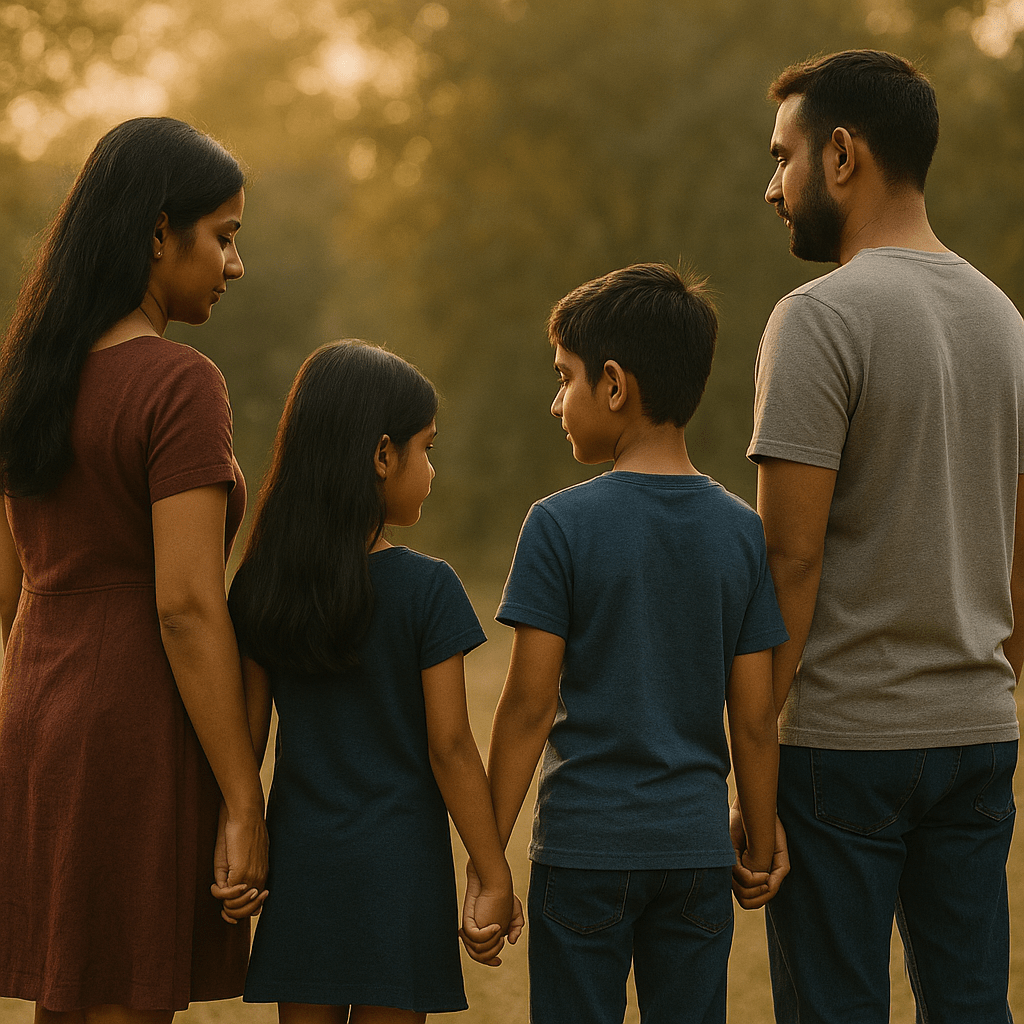
We don’t usually internalize this but, I think, we are, for most part, exactly like our parents. The debate between nature vs nurture in playing a pivotal role in building our adult personalities is an old one. Earlier, during my twenties, I had a firm belief that nature dominates over nurture. This belief, however, has now shifted entirely — I now feel that nurture matters far more.
This shift came from learning how children actually learn (my education at Harvard helped). It is also connected to my education in scientific concepts like the evolutionary history of the homo sapiens as species. Understanding how we are brought up during our childhood opens up opportunities to understand who we are today. It’s also the key to making ourselves overcome certain limitations our upbringing may have brought to us. Understanding our childhood is the first step in overcoming these limitations.
This raises the question: what’s the key to a good nurturing in childhood?
I think the prominent answer to that lies in love. If a child receives love from their parents, or from a “concerned adult”, it creates a powerful sense of stability in children. This feeling of stability extends well into adulthood.
A lack of love between parents often becomes visible in a child’s upbringing. It can make a child feel very insecure or afraid. Continuous fighting between parents can also cause insecurity in a child. This insecurity may well extend into adulthood. In cases when one parent is missing, the other parent’s role becomes even more crucial. They must ensure their child gets unbiased love from them. I refer to this love as “positive love”. It’s the kind of love you’d expect Harry Potter’s parents to give to him. It’s the kind of love that makes you brave, courageous, kind, unafraid of failure, and empathetic to others.
Then, there’s also the kind of love we may refer to as “non-positive love”. A good example of that love is what Harry’s cousin Dudley or Harry’s nemesis, Draco Malfoy, received. Though unconditional, this kind of love had made both Dudley and Malfoy deeply insecure, turning them into bullies. It made them consistently compare with others, and nudged them to harm Harry at every opportunity they got. It’s the kind of love that makes anyone a coward, cruel, rude, clingy, selfish, jealous, and afraid of failure.
| Few traits of Positive love | Traits of Non-positive love |
|---|---|
| Mostly driven by love between parents /concerned adult | Mostly driven by loss of love between parents; fighting/bickering between parents/concerned adult |
| Children don’t often compare themselves with other children | Children compare themselves with others, primarily driven by parents need of comparison or fear |
| Children are not afraid of failure because they know they can fall back on their parents; parents encourage failure as a positive learning experience | Failure is considered a reflection of parent’s report on their parenting; children feel failure is the end of the world; they hesitate in feeling dependent on their parents |
| Mostly make children kind, secure, brave, and empathetic to others | Mostly make children cruel, clingy, and show lack of empathy to others |
| The kind of love we believe Harry Potter’s parents would have given him if they were alive | The kind love given to Dudley, Harry’s cousin; or to Draco Malfoy, Harry’s nemesis at Hogwarts |
There’s a third kind of love too which is nothing but the “absence of love”. Under this condition, the child often feels conflicted with the concept of love itself. Having no sense of what that feeling is, they feel disconnected with their surroundings. A feeling of emptiness, or in some cases, abandonment takes over.
In Harry’s case, after he went to Hogwarts, he understood that he was loved by his parents. He realized this even though they were dead. He understood that love can be felt even when the person is not there with you anymore. The “absence of love” happens when, despite the presence of the parents/concerned adult, the child doesn’t get love.
As children grow old, they also fall into one of these categories as adults. This happens because of the intimate experience of going through it with their parents or a concerned adult. In a way, the children turn into their parents.
This categorization sticks through our adult life unless we take concerted efforts to understand our upbringing and make efforts to transform us into “positive lovers”. The natural categorization influences us to reflect positive, non-positive or absence of love in almost all aspects of our lives. This includes who we date and marry, and what career we choose. Most importantly, it involves how we raise our own children (if we choose to have them).
But what’s the process of becoming a “positive lover”? In my opinion, it has three steps to it:
- Analyze and acknowledge the kind of love we received in our childhood. It is important to be non-judgmental to our parents/concerned adult while doing this exercise.
- Determine our current category (positive, non-positive, or absent) as an adult.
- Identify concrete actions/steps towards becoming a positive lover. Writing these steps are helpful.
The third step is crucial because it will determine the type of children we will raise. The children we will raise is directly based on the type of adult we are while raising them. Personally, for me, having the idea of children excites me. Many of my friends and I are at a stage where we are planning to have kids. Some of us already have them. For my future children, I want to make sure that I provide them with “positive love”.
Of late, I have realized that parenting is probably one of the most powerful tools for self-transformation too. When we will choose to parent differently — with more awareness, empathy, and intention — I believe that we will start to heal parts of ourselves we didn’t even know were wounded. We will begin to notice patterns in our own behaviors that once went unquestioned. We will pause before reacting, will listen more closely, and will try to give our children the kind of love we may have missed.
Of course, none of this could happen without taking the first step in acknowledging that our behaviors as an adult are a reflection of our upbringing. Accepting that is in itself a daunting task. By choosing to acknowledge it and raising our children on the foundation of “positive love” , we aren’t just shaping our children’s lives — we are also reshaping our own. Parenting, in that sense, isn’t just an act of giving. It’s also a process of becoming. We get a second chance at childhood through the eyes of our kids. And in that second chance lies the possibility of deep, lasting change.
Understanding the kind of love we received as children isn’t just about looking back — it’s about taking charge of who we become. Whether we grew up with positive love, non-positive love, or the absence of it, we always have the power to rewrite our story – and in turn, writing the story of our children’s lives.
