
A Good Life

Two Harvard Graduates, and What They Can Teach Us About Raising Happy Individuals

I have been obsessed about understanding the deeper meaning of life and especially in understanding what makes life happy and meaningful. After years of reading on the subject, here is a story that I feel illustrates my learning on the subject in the most simple way.

Two men graduate from Harvard. One of them dreams of becoming a writer. During the Second World War he keeps a diary, and he plans to turn it into a book someday. But his mother falls ill, so he goes home. He becomes a teacher.

The other man does exactly what we hope our own children will do. He builds a serious career in law. He earns the name, the status and the money, everything we usually mean when we say someone “made it.”

Now the question: which of them was happier in life?

The two men

Both were participants in the Harvard Study of Adult Development, which began in 1938 and has followed its participants for more than 85 years. Robert Waldinger and Marc Schulz, who now lead the study, tell their story in a book called The Good Life. They call the lawyer John Marsden and the teacher Leo DeMarco (the names are changed to protect their privacy).

John was far more successful by every conventional measure. Yet he reported feeling disconnected and sad for much of his life. He was one of the least happy men in the study. His marriage was a struggle, his bond with his children was strained, and his career came first.

Leo earned much less, and he never wrote his book. But he was one of the study’s happiest men. He had a purpose. The authors write that Leo found his work meaningful specifically because he took pleasure in the benefit others got from his teaching. And his relationships kept growing: with his mother, his wife, his children, and his students.

What the study actually found

The central finding of the Harvard study is stated almost embarrassingly plainly: good relationships are what keep us happier and healthier. Not career success. Not income. Not status. Waldinger’s own short definition of a good life is “being engaged in activities I care about with people I care about.”

The uncomfortable question

I write a lot about children in India, and I keep returning to what we put at the centre of their lives. Marks. Rank. Percentile. Package. All of it matters, and I would never argue otherwise. But how much time do we spend teaching our children how to be in a relationship with other people? Are we teaching them to be happy, or only to be successful?

John had every one of the things we are working so hard to give our children. What he did not have, in the places that counted, was people.

The good news is that relationships are a skill, and a skill can be taught. Here are four ways to start, drawn from the study’s own findings and from how Waldinger, Schulz and other researchers talk about them.

Strategy one: Be the one steady adult who cares deeply about them

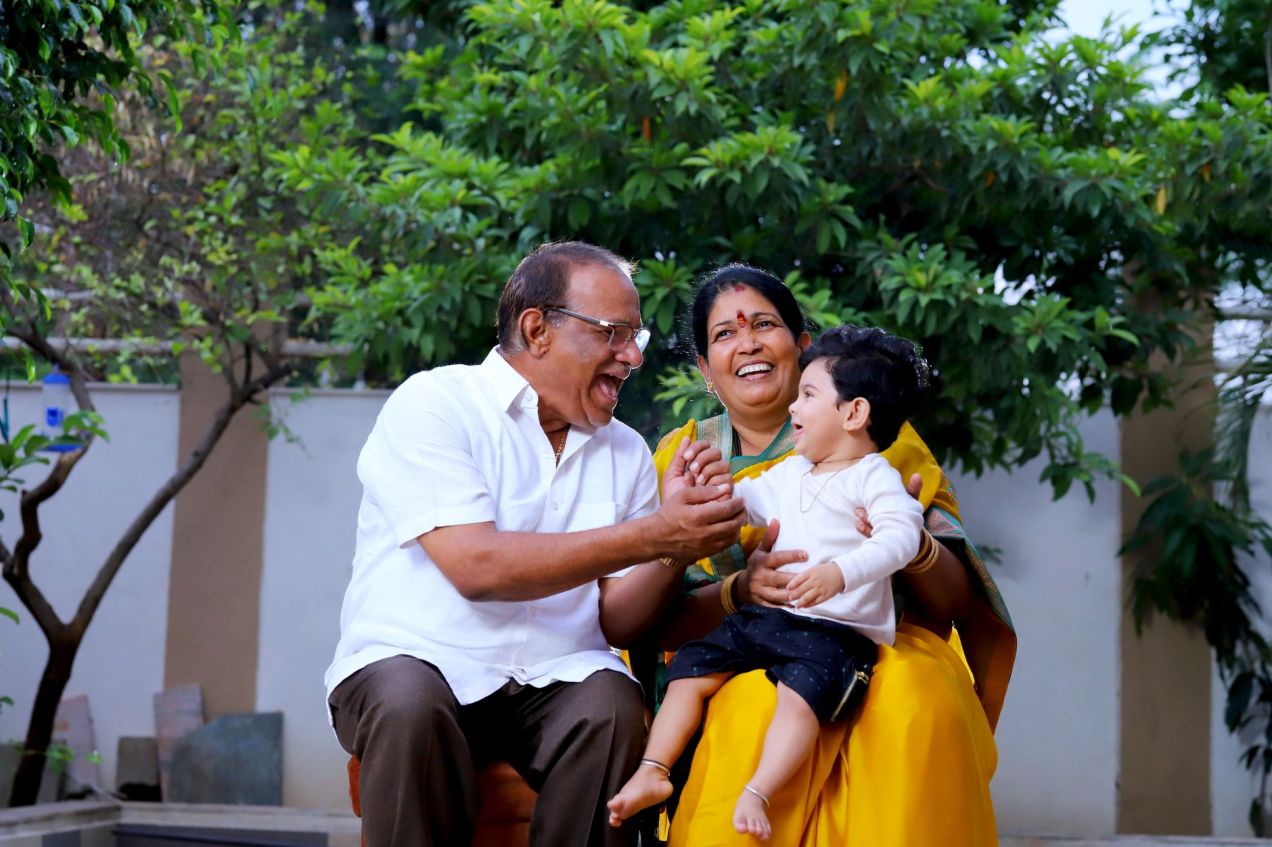
Waldinger, citing the developmental researcher Michael Rutter, says a child needs at least one consistent, caring adult who is “crazy about them.” That is the foundation. A child who knows they are loved without conditions learns that relationships are safe, and that is the starting point for every other relationship they will have.

The book makes a related point: as children, we learn from our families how to handle emotions. So the second half of this strategy is modelling. Children copy what they see far more than what they are told. Let them watch you call an old friend, visit a grandparent, or apologise first after an argument. If every conversation they see is about work and money, that is what they will learn matters.

Strategy two: Protect regular, screen-light time together

The authors recommend regularly set family time, such as shared meals, or video calls if you live apart. They also suggest minimising the damage of screens by prioritising communication over browsing and creating screen-free time.

Choose something small and keep it. One meal a day with phones in another room. Fifteen minutes before bed that belong only to your child, with no agenda and no homework talk. Regularity matters more than length. Children come to trust time that is reliably theirs.

Strategy three: Teach curiosity, and reaching out first

Waldinger encourages staying curious even with people you know well, with a question such as “What’s here that I have never noticed before?” Questions tell people you are interested in them. The authors also suggest paying attention to the people you already see regularly but don’t know well, and being open to the possibility that they will surprise you.

Ask your child one real question every day, and listen to the whole answer. “What was the best part of school today?” is better than “How were your marks?” Then give them small reaching-out tasks. Ask them to spend time with their dadaji/dadiji/nanaji/naniji whenever they feel like, or to message a friend they haven’t spoken to in a while. The first message is always the hardest, and children who practise it early find it much easier later.

Strategy four: Teach them to repair, and to be themselves

Disagreements are part of every close relationship. What matters is what happens next. Waldinger says the relationships people value most are the ones where they feel they don’t have to stifle, suppress or hide parts of themselves, and that arguments are fine as long as you still feel respected. The authors also encourage leaning into vulnerability rather than hiding your feelings during conflict.

When your child fights with a friend or a sibling, don’t only settle the argument. Help them find words for what they felt (“I felt left out”), and show them how to apologise and move on. Do it yourself too: when you lose your temper, come back later and say “I’m sorry I shouted.” A child who learns that a relationship can survive a fight will not be afraid of closeness.

Why this matters

Leo Eventually never wrote his book. His life turned out to be the thing worth writing about, because of the people in it.

If a Harvard graduate can reach the top of his profession and still end up lonely, then success alone cannot be our goal for our children. It can be one of the goals, and a good one. But a child who grows up able to love, to ask, and to reach out has something no rank list will ever show.

Three books, if you want to go further

The Good Life by Robert Waldinger and Marc Schulz is the source of this story, and the best place to start. It is accessible, warm, and backed by more long-term data than almost anything else on happiness.

The Happiness Files by Arthur C. Brooks collects short, practical lessons on work and life from a Harvard scholar of happiness.

Man’s Search for Meaning by Viktor Frankl. Read the first half, Frankl’s account of his years in concentration camps. It is a powerful look at why having a purpose, and people to live for, can carry a person through the worst conditions.


References

Brooks, A. C. (2025). The happiness files.

Frankl, V. E. (1946/2006). Man’s search for meaning (Part One: Experiences in a concentration camp). Beacon Press.

Waldinger, R., & Schulz, M. (2023). The good life: Lessons from the world’s longest scientific study of happiness. Simon & Schuster.

Robert Waldinger. Author talks: the world’s longest study of adult development finds the key to happy living (study start in 1938, cohorts, sample limits).

Robert Waldinger. Forget regret: how to have a happy life (definition of a good life).

Rise with Drew. Lessons from the Harvard study of happiness and A Wealth of Common Sense, post on the Harvard study(John Marsden and Leo DeMarco).

Tricycle. Robert Waldinger on happiness (the consistent caring adult, curiosity).

Shortform. Summary of The Good Life (family time, screens, attention, curiosity; secondary summary, to be checked against the book).
Standard
A Good Life, INDIA

Should Kids Have a Social Media Account? Here’s What the Evidence Says

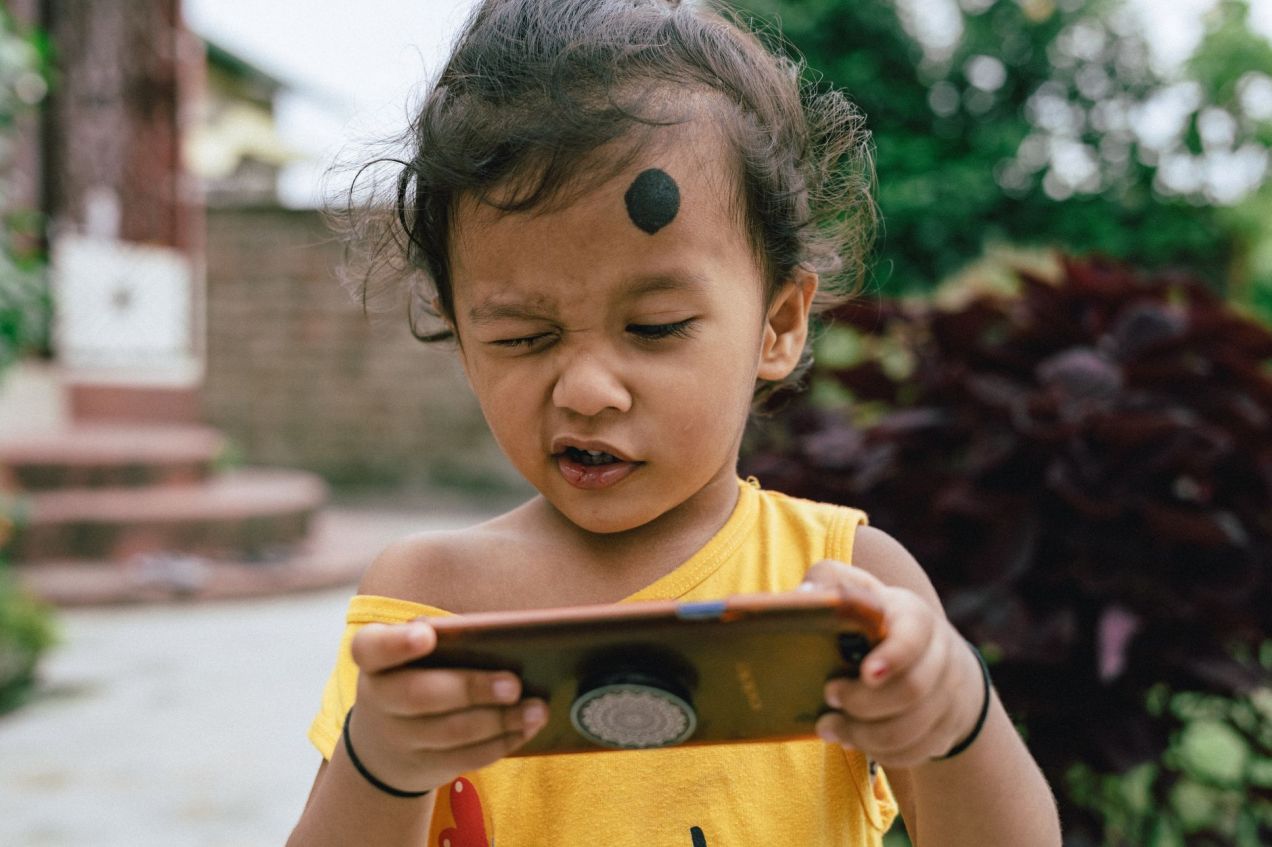
Should a 13-year-old be able to open a social media account on their own?

On September 28, 2026, India’s Supreme Court asked the government to look at exactly that. Reports differ on what the government agreed to, and government sources have since denied reports of any widespread ban on social media for kids under the age of 18. But things can always change.

Whatever happens next, the question isn’t going away, and it matters to anyone who is a parent, plans to be one, or simply cares about the next generation.

What the evidence says

The developing brain. The US National Institute of Mental Health notes that the brain keeps maturing into the mid-to-late 20s, and that the prefrontal cortex, the region behind the forehead responsible for skills like planning, prioritizing and decision-making, is one of the last parts to mature. It adds that teenagers’ focus on peer relationships, combined with that ongoing development, can lead them to weigh social benefits more heavily than possible consequences (National Institute of Mental Health, n.d.).

One study looks at what happens when that stage meets social media. Researchers at UNC Chapel Hill followed adolescents aged 12 to 13 for three years, using brain scans. Those who habitually checked social media, more than 15 times a day, became more sensitive over time to anticipated social rewards and punishments, while those who checked less became less sensitive (Maza et al., 2023). While the researchers are careful about what this shows: it is an association, not proof that social media caused the change, and calls for more research, it is still an interesting finding.

What a US court found about Meta. In 2026, a New Mexico court found that Meta had knowingly designed Instagram and Facebook to be addictive and had failed to act on what it knew about child exploitation on its platforms. The case produced $375 million in penalties in March and a further $567 million in August, about $942 million in total (New Mexico Department of Justice, 2026; PBS NewsHour, 2026a; TechCrunch, 2026).

India’s own Economic Survey. The Economic Survey 2025–26, tabled in Parliament on January 29, 2026, noted that social media addiction is “strongly associated with anxiety, depression, low self-esteem, and cyberbullying stress,” and is highly prevalent among 15-to-24-year-olds, citing multiple Indian and global studies (Press Trust of India, 2026; Ministry of Finance, 2026).

The other side of the ledger. None of this is one-directional. The US Surgeon General’s 2023 advisory raised serious concerns and said there wasn’t enough evidence to call social media safe for young people. It also noted real benefits, such as community and connection for some of them (Office of the U.S. Surgeon General, 2023).

Other countries are already acting

Australia began enforcing a minimum age of 16 for major platforms in December 2025 (Fortune, 2025). Indonesia began enforcing an under-16 restriction on “high-risk” platforms on March 28, 2026, phased in starting with the major platforms (Bernama, 2026). Malaysia has moved to introduce its own under-16 rule under its Online Safety Act (Fortune, 2025). Several other countries are considering similar steps.

Where the real difficulty lies

Deciding on an age limit is one question. Making it work is another, and countries that have tried have run into it.

Age checks come first. Today, platforms largely rely on users declaring their own age, which the court found insufficient under Indian law (The Quint, 2026). Checking age more reliably means collecting more data, which raises privacy questions of its own.

Then there is the law. France passed an under-15 social media law in July 2026, but in August its Constitutional Council struck it down, finding that it limited freedom of expression disproportionately and lacked adequate privacy safeguards. The law never took effect (Library of Congress, 2026; PBS NewsHour, 2026b).

Finally, enforcement. The Supreme Court has indicated that if the government doesn’t act, it may issue directions to platforms itself (Jain, 2026), and any rule will depend on platforms, many of them global companies, actually complying. Young people also tend to find workarounds for any rule that can be bypassed.

If India goes ahead with any version of this, the real challenge will be implementation, along with the political and legal questions that come with it.

What families can do in the meantime

Whatever the law ends up doing, the conversation can start at home, with your children, nieces and nephews, even grandchildren. Ask them what they enjoy about social media, and what else they’d like to spend that time on. You may learn more from their answers than from any headline.

Three books for further reading

  • The Teenage Brain by Frances E. Jensen, with Amy Ellis Nutt: a neurologist’s guide to how adolescent brains develop and why teenagers behave as they do.
  • Irresistible by Adam Alter: how technology is designed to hold our attention.
  • The Anxious Generation by Jonathan Haidt: the best-known argument for delaying smartphones and social media for children. Some researchers dispute how strong the causal evidence is, so it’s worth reading alongside other views.

References

Bernama. (2026, March 28). Indonesia bans social media use for under-16s as PP Tunas takes effect. Bernama. https://bernama.com/en/news.php?id=2538414

Business Standard. (2026, September 29). Centre to amend IT rules to bar under-18s from social media accounts. https://www.business-standard.com/india-news/centre-to-amend-it-rules-to-bar-under-18s-from-social-media-accounts-126092900418_1.html

Dubey, N., Datta, J., & Balaji, S. (2025). Child’s personal data and privacy: Analysing the draft DPDP rules, 2025. Bar & Bench. https://www.barandbench.com/law-firms/view-point/childs-personal-data-and-privacy-analysing-the-draft-dpdp-rules-2025

Fortune. (2025, December 9). Australia will start banning kids from social media this week, and Malaysia is getting ready to do the same. https://fortune.com/2025/12/09/australia-will-start-banning-kids-from-social-media-this-week-and-malaysia-is-getting-ready-to-do-the-same/

Jain, D. (2026, September 28). Make rules to regulate children’s social media usage: Supreme Court tells Centre. LiveLaw. https://www.livelaw.in/top-stories/supreme-court-pil-against-minor-children-access-to-social-media-sc-says-may-issue-directions-against-social-media-intermediaries-safe-harbor-immunity-552127

Lakshmikumaran & Sridharan Attorneys. (2025). Digital Personal Data Protection Rules. https://www.lkslaw.com/insights/articles/article-1

Library of Congress. (2026, September 16). France: Constitutional Council rules against the ban on social media for children under 15. Global Legal Monitor. https://www.loc.gov/item/global-legal-monitor/2026-09-16/france-constitutional-council-rules-against-the-ban-on-social-media-for-children-under-15/

Maza, M. T., Fox, K. A., Kwon, S.-J., Flannery, J. E., Lindquist, K. A., Prinstein, M. J., & Telzer, E. H. (2023). Association of habitual checking behaviors on social media with longitudinal functional brain development. JAMA Pediatrics. https://jamanetwork.com/journals/jamapediatrics/article-abstract/2799812

Ministry of Finance, Government of India. (2026, January 29). Economic Survey 2025–26. https://www.indiabudget.gov.in/

National Institute of Mental Health. (n.d.). The teen brain: 7 things to know. https://www.nimh.nih.gov/health/publications/the-teen-brain-7-things-to-know

New Mexico Department of Justice. (2026). New Mexico Department of Justice wins landmark verdict against Meta [Press release]. https://nmdoj.gov/press-release/new-mexico-department-of-justice-wins-landmark-verdict-against-meta/

Office of the U.S. Surgeon General. (2023). Social media and youth mental health: The U.S. Surgeon General’s advisory. U.S. Department of Health and Human Services. https://www.hhs.gov/surgeongeneral/reports-and-publications/youth-mental-health/social-media/index.html

PBS NewsHour. (2026a, August 7). New Mexico court orders Meta to pay $567 million over mental health harms to kids online. https://www.pbs.org/newshour/nation/new-mexico-court-orders-meta-to-pay-567-million-over-mental-health-harms-to-kids-online

PBS NewsHour. (2026b). France’s top court blocks under-15 social media ban, citing constitutional freedoms. https://www.pbs.org/newshour/world/frances-top-court-blocks-under-15-social-media-ban-citing-constitutional-freedoms

Press Trust of India. (2026, January 29). Make platforms enforce age verification to curb digital addiction: Economic Survey. Upstox. https://upstox.com/news/business-news/latest-updates/make-platforms-enforce-age-verification-to-curb-digital-addiction-economic-survey/article-188531/

South Carolina Attorney General’s Office. (n.d.). At what age can my child use social media? Internet Crimes Against Children Task Force. https://www.scag.gov/internet-crimes-against-children/blog/at-what-age-can-my-child-use-social-media/

TechCrunch. (2026, August 7). New Mexico court orders Meta to pay additional $567M in child safety case. https://techcrunch.com/2026/08/07/new-mexico-court-orders-meta-to-pay-additional-567m-in-child-safety-case/

The Logical Indian. (2026). Supreme Court pushes Centre for 18-year age bar on social media accounts, citing minors’ inability to enter contracts. https://thelogicalindian.com/?p=128796

The New Indian Express. (2026, September 30). Government denies plans to curb social media access for under-18s. https://www.newindianexpress.com/india/2026/Sep/30/government-denies-plans-to-curb-social-media-access-for-under-18s

The Quint. (2026). Centre supports Supreme Court move to legally bar minors from social media. https://www.thequint.com/news/breaking-news/supreme-court-centre-bar-minors-social-media

Standard
A Good Life, Ideas

What Should We Teach Our Children in the Age of AI?

Here’s something I think about often these days: AI is going to change the shape of a human life, and probably sooner than most of us are prepared for.

In the short term, I think it will cost jobs – real ones, and a lot of them. That part isn’t controversial anymore. But I don’t think that’s the end of the story. My own belief is that in the longer run, AI leads somewhere better: toward genuine abundance. And when the basic questions of survival and income start answering themselves, people don’t stop asking questions – they start asking bigger ones. What is this all for? What actually matters? I wouldn’t be surprised if this decade turns out to be the beginning of a quiet, worldwide resurgence in spirituality, simply because abundance has a way of pushing people back toward the questions that productivity usually crowds out.

Which raises the question I actually want to sit with here: if this is genuinely where we’re headed, what should we be teaching our children right now?

I keep coming back to the same three things.

One: Knowing yourself, deeply

The first is the ability to sit with yourself – really sit, without needing to reach for a phone, a distraction, or an escape hatch the moment things get quiet or uncomfortable.

This is, I think, the most underrated skill a person can have, and it’s one AI will never be able to hand anyone. No model, however advanced, can look inward on your behalf. It can’t sit with your discomfort for you, or help you understand what you actually want beneath what you think you’re supposed to want. That work has always belonged entirely to the person doing it – through meditation, through yoga, through honest reflection – and I think it’s about to matter more, not less, precisely because AI will strip away so many of the external distractions and obligations that used to fill the time where that self-knowledge might otherwise develop.

Two: Good relationships

The second is relationships – not networking, not “who you know,” but the real, sustained kind.

Harvard has run the longest study of adult development in the world, tracking the same people and, eventually, their children, for more than 84 years. Robert Waldinger and Marc Schulz, who now lead the study, wrote a book about its findings called The Good Life. Their conclusion, distilled from over eight decades of data, is disarmingly simple: “..good relationships keep us healthier and happier. Period.” Not career achievement. Not income. Not status. Relationships.

I don’t think this is a coincidence, and I don’t think it’s a soft, sentimental finding – I think it’s a foundation. Career matters. Financial security matters. Health matters. But relationships are the thing everything else seems to be built on top of. And this is, again, something AI cannot do for a child. It can simulate conversation, but it cannot give someone the lived experience of being truly known by another person, or the discipline of showing up for someone else over decades. That’s still entirely on us.

Three: Fundamentals – not just subjects

The third is fundamentals. And I want to be precise about what I mean by that, because it’s not the same as “make sure your kids study hard subjects.”

What I actually mean is the underlying grammar of how things work – whether that’s a scientific principle or a basic truth about how life tends to operate. The value isn’t in memorizing a specific fact. It’s that once you genuinely understand a fundamental, you can derive new answers yourself, in situations nobody taught you to expect. AI can hand a person an answer instantly. What it can’t hand someone is the internal capacity to know whether that answer is actually right, or to build the next one from scratch when the question changes. That capacity only comes from understanding things at the root, not the surface.

Why this all matters more, not less

The abundance that AI brings, though, will come with its own demands. I think our children – and honestly, all of us – will need more support than we’ve needed in a long time. Support in knowing ourselves deeply. Support in building relationships that actually hold up. Support in learning fundamentals well enough that the integration of new knowledge stays in our own hands, rather than something we simply outsource and stop understanding.

That, to me, is the real task ahead. Not competing with AI.

Three books, if you want to go further

If any of this resonates, here are three books I’d genuinely recommend, one for each of the ideas above:

Autobiography of a Yogi by Paramahansa Yogananda – the foundational text, for me, on what it actually means to know yourself. It’s shaped more of modern Western interest in Indian spiritual thought than almost any other single book, and it holds up.

The Good Life by Robert Waldinger and Marc Schulz – the book behind the Harvard study mentioned above. Accessible, well-written, and backed by more real longitudinal data than almost anything else written about happiness.

The Great Mental Models, Volume 1: General Thinking Concepts by Shane Parrish — the clearest starting point I know of for learning to think in fundamentals rather than facts, across science, economics, and everyday decision-making.


References

Waldinger, R., & Schulz, M. (2023). The good life: Lessons from the world’s longest scientific study of happiness. Simon & Schuster.

Standard