A Good Life, INDIA

Three Things I Wish I’d Learned in School

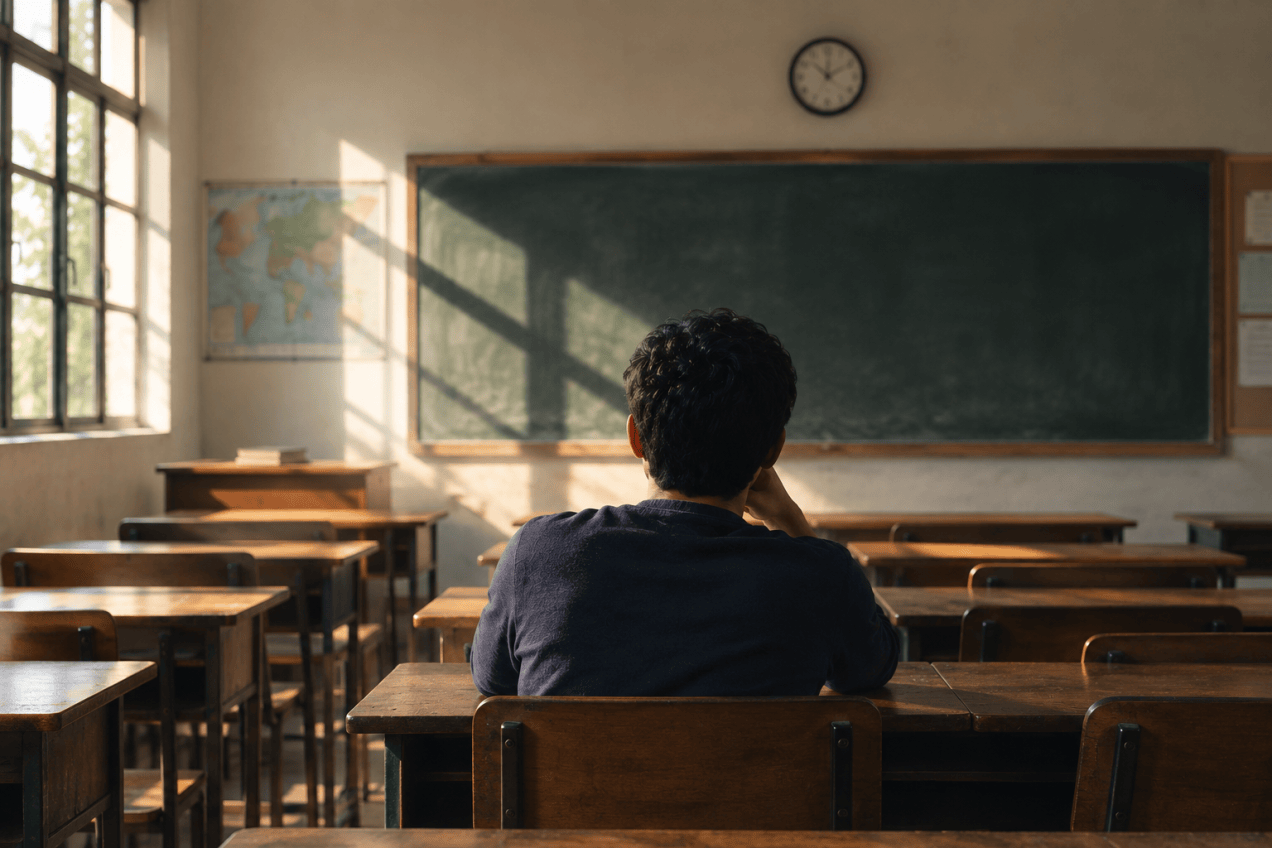
What are the three things you wish you’d been taught at school — things that could have changed your life, had you known about them sooner?

I’ve been sitting with that question for a while now. And for me, the answer keeps coming back to the same three things, none of which showed up anywhere in my actual education.

One: The life of Swami Vivekananda, and Karma Yoga

I came across Swami Vivekananda at a point in my life when I was genuinely struggling to figure out what I was meant to do with it.

Vivekananda was born Narendranath Datta in Calcutta in January 1863. He became a disciple of the sage Ramakrishna, and in 1893 he travelled to the United States to speak at the World’s Parliament of Religions in Chicago, where his opening address made him something of an overnight sensation in the West. Over the next four years he lectured across America and England, and in the winter of 1895–96, working out of a rented room on West 39th Street in New York, he delivered a series of talks that a stenographer named Joseph Josiah Goodwin transcribed and published as Karma Yoga in February 1896. He returned to India in 1897, founded the Ramakrishna Mission that same year, and died in 1902 at just 39.

Karma Yoga is, at its heart, about work — but not work in the way we usually think about it. Vivekananda’s argument, drawing on the Bhagavad Gita’s famous instruction that a person has a right to their actions but never to the fruits of those actions (Gita 2.47), was that the quality of a life isn’t measured by outcomes achieved but by the spirit in which the work itself is done. Do the work fully. Release your grip on how it turns out. That’s the discipline.

I won’t pretend I fully live this. But encountering that idea — that your worth isn’t contingent on results you can’t fully control — gave me something I hadn’t found anywhere else at that point: a sense of purpose that didn’t collapse every time an outcome didn’t go my way.

And here’s what stays with me: for a thinker this central to modern Indian thought — someone whose birthday is marked as National Youth Day, whose Chicago address is still taught in comparative religion courses around the world — he was barely a footnote in my own school textbooks.

Two: Swabhava and Swadharma

The second thing comes from the Bhagavad Gita as well, from its eighteenth chapter.

Swabhava is your intrinsic nature — the particular mix of temperament, inclination, and aptitude you were built with. Swadharma is the duty, the role, the path that flows naturally from that nature. Not the path someone else thinks you should take. Not the path that looks most impressive. The one that actually fits who you are.

The Gita is remarkably direct about this. In chapter 18, verse 47, Krishna tells Arjuna that it is better to imperfectly follow one’s own dharma than to perfectly imitate someone else’s — and that acting in accordance with your own nature carries no fault, even when it’s flawed (a related formulation appears earlier too, in 3.35). A few verses earlier, in 18.41 through 18.44, the text describes how different temperaments naturally incline toward different kinds of work — not as a rigid caste prescription to be read literally in the modern world, but as a genuinely useful idea underneath it: people are wired differently, and trying to force everyone through the same narrow definition of success is a category error.

I think about how much of modern education — and modern career advice — runs in the opposite direction. Pick the prestigious path. Follow the template. Optimize for the outcome everyone agrees is impressive. Almost none of it starts from the question the Gita starts from: what is your actual nature, and what work genuinely flows from it?

I don’t think this is a minor idea. I think it’s one of the most important things a young person could be taught — early, and taught well — before a decade of external pressure teaches them to ignore their own nature entirely. It deserves to be central to how we think about education, not a footnote in a philosophy elective nobody takes.

Three: Meditation

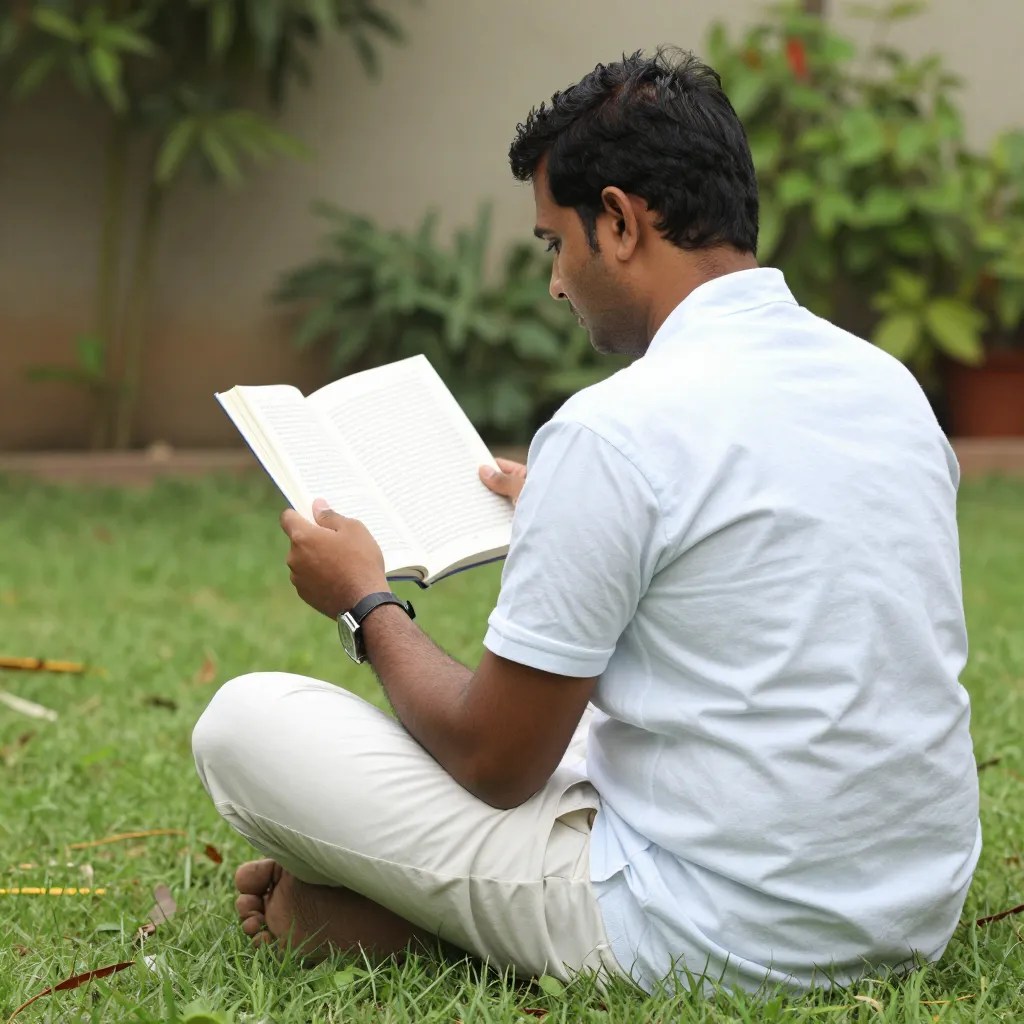
The third thing is meditation — and I mean the plain, undramatic version of it, not the version that gets caricatured. Not sitting cross-legged, chanting, performing serenity. Just the practice of noticing where your mind has gone, and gently bringing it back to the present moment. Again. And again. And again.

This isn’t just a spiritual claim anymore — it’s a reasonably well-studied one. A review of the research by the American Psychological Association found that mindfulness-based approaches show real, measurable effects on reducing stress, anxiety, and depression, and that mindfulness-based cognitive therapy in particular has shown significant success in reducing relapse for people with recurrent depression (American Psychological Association, 2019).

But for me, the case for it isn’t really the research. It’s that meditation carried me through some of the hardest points in my life — points where very little else did. Not by making the difficulty disappear, but by giving me a way to be present with my own mind without being at its mercy. That’s a skill. Like any skill, it can be taught. And like most genuinely useful skills, it wasn’t taught to me until I went looking for it myself, well into adulthood.

Why this matters

None of these three things were part of my formal education. All three shaped my life more than most of what was.

I don’t think this is a coincidence, and I don’t think it’s unique to me. A curriculum built entirely around measurable outcomes — grades, ranks, placements — will always struggle to make room for ideas like these, because none of them are easily testable. But “easily testable” and “actually important” have never been the same thing.

If I had to make one argument today, it would be this: alongside the syllabus, there is a case for teaching people who they are, what they’re actually suited for, and how to sit with their own minds. Those aren’t soft add-ons to a real education. For a lot of us, they end up being the entire foundation everything else stands on.


References

American Psychological Association. (2019, October 30). Mindfulness meditation: A research-proven way to reduce stress. https://www.apa.org/topics/mindfulness/meditation

Bhagavad Gita, Chapter 2, Verse 47; Chapter 3, Verse 35; Chapter 18, Verses 41–44, 47.

Vivekananda, S. (1896). Karma Yoga. Longmans, Green, and Co. (Lectures delivered New York, December 1895–January 1896; transcribed by Joseph Josiah Goodwin.)

Standard
INDIA

Before You Film the Broken Toilet, Meet the Teacher Behind It

You’ve probably seen it by now — people walking into government schools with a camera, asking teachers why the toilets don’t work, why the walls are broken, why things haven’t changed. And honestly? Asking for better schools is a good thing. India needs this conversation.

But before going further, here’s the scale of what we’re actually talking about.

The scale

India runs over 14 lakh schools in total. Of these, over 10 lakh — 10,05,245, to be exact — are government schools, according to the Ministry of Education’s own UDISE+ 2025–26 data. Those government schools alone are staffed by roughly 51 lakh teachers, based on the finding that government schools employ 50.9% of India’s more than 1 crore total teachers.

That’s the system at the center of this conversation.

The problems being pointed out are real

Broken infrastructure, missing basics — genuine gaps still exist across a system running over 10 lakh schools. Running something at this scale is hard, and there’s real work still to do. That part of the conversation is fair, and it’s worth saying plainly: wanting better schools is right. Asking the hard questions, pushing for better infrastructure, better resources, better systems — that work matters, and it shouldn’t stop.

What the cameras don’t show

Here’s what I don’t see enough of in this conversation: the person standing behind that broken door, doing their best with almost nothing.

Teachers don’t just teach. Many schools across the country — most of them government schools — run with just a single teacher. As of UDISE+ 2025–26, that’s 1,00,843 schools nationwide operating on a single teacher’s shoulders.

And it’s not even just teaching. These same teachers also take on responsibilities the country genuinely needs — election duty, census work, Aadhaar enrollment drives, community surveys. Important work. But it adds to everything already asked of them. India’s Right to Education Act technically restricts non-academic work assigned to teachers to elections, the decennial census, and disaster relief — but in practice, the range of civic and administrative tasks teachers take on has grown well beyond that, from voter list verification to government scheme surveys to mid-day meal monitoring.

What hundreds of school visits taught me

I’ve visited hundreds of government schools myself — in Rajasthan, in Bihar, in UP. And what stayed with me wasn’t the broken benches. It was the teacher who’d travelled two hours to get there. The one running a class of four grades at once. The one who was also, somehow, the person the whole village turned to for getting a child’s Aadhar card made.

I walked away inspired more often than I walked away disappointed.

The point

So yes — wanting better schools is right. Ask the hard questions. Push for better infrastructure, better resources, better systems. That conversation matters, and it shouldn’t stop.

But somewhere in that demand, let’s not lose sight of the people already giving everything they have to make it work anyway. Most of these teachers aren’t the problem. They’re doing their best with whatever they’ve been given.

And that deserves a little bit of our empathy too.

References

Kashmir Reader. (2026, May 4). Election duty, Aadhaar verification, census work: Govt school teachers are losing classroom time. https://kashmirreader.com/2026/05/05/election-duty-aadhaar-verification-census-work-govt-school-teachers-are-losing-classroom-time/

Ministry of Education, Government of India. (2025, August 28). UDISE+ 2024–25: School education report.

Press Information Bureau, Government of India. (2025, August 28). Ministry of Education releases report on Unified District Information System for Education Plus (UDISE+) 2024–25 on school education of India. https://www.pib.gov.in/PressReleasePage.aspx?PRID=2161543&reg=3&lang=2

Ministry of Education, Government of India. (2026, July 7). Report on Unified District Information System for Education Plus (UDISE+) 2025–26 on school education in India.

Right to Education Act, 2009, (India). Restrictions on deployment of teachers for non-educational purposes.

The Federal. (2025, October 1). Students schemes, tree plantation and blood donation to census, poll duty — what’s keeping teachers busy. https://thefederal.com/category/the-eighth-column/govt-govt-aid-public-schools-teachers-non-academic-work-burden-elections-census-209448

Standard
A Good Life

The World Where Our Memories Live

I have been thinking about memories. When I say memories, I mean those instances in our lives that we remember vividly: moments that shaped us into who we are today.

A fundamental question about these moments (or memories) is whether they existed in the past or whether they exist in the present.

And, is there a world where memories are a living reality because both the past and the present combine into what is truly present?

It’s interesting (at least to me) how I came to think about these questions. As I sat in the fourth row at an orchestra playing Tchaikovsky’s Fourth Symphony, I found myself closing my eyes and listening to every rhythm of this masterful piece, especially the second movement. Never have I listened to anything so beautiful, so vivid.

As I closed my eyes and listened, I found myself transported (without any ticket collector asking for a ticket) to a world of my own memories. It was a surreal feeling. Here I am, sitting in a beautiful hall with my wife and mother, but I am also not here.

Has it ever happened that you feel you are in two places at the same time? I am certain that I was.

As I sat in my chair, I saw myself traversing the times of my childhood. I saw that I am an invisible bird that is observing the younger me. I am not directly above – not at a perfect ninety-degree angle – but somewhere at an acute angle to myself. This bird, that is me, is trying to feel what this child – again, me – is feeling.

She is watching me so that she can tell the man listening what it is that I have been doing or feeling in that moment. Does that make sense? Maybe it does not, but that is okay. I am sure that not many people in their lives have had such an experience where they could feel themselves coming out of their body, going back in time, observing themselves flying overhead to observe themselves! It sounds absurd, right?

Yet here I am. The bird sees my father’s dead body being taken away as I, a boy of six years, played with my Lego-type toys surrounded by crying older women. She sees me on a hot summer day, coddled in my sunny storeroom, waiting for my mother to come back home from the office so that I can run to her. The bird sees me sweating profusely in that sweltering summer heat, believing that this is the way of life where you are supposed to shed that salty water every day, all day. She sees me being teased and molested. She sees me flying kites. She sees me playing rugby as a fourteen-year-old, with my friends in school, being extremely happy.

That bird sees me, and she sees many more moments; some make me teary-eyed, some make me smile.

If you listen to the second movement by Pyotr Ilyich Tchaikovsky, you will understand what I am talking about. The ebbs and flows of the movement take anyone listening intently into the life they have lived so far and bring to their mind the freshness of the life we call the past. It brings to the surface things that matter to them, both good and bad, and that is the beauty of what Tchaikovsky put into this extraordinary piece of music.

I realised that I have been flying from one moment to another. Not that I had wings whatsoever, but I did have the power to move from one memory to another very quickly. Even though I did not have the power to choose which memory I wanted to visit next, I had the power to stop myself if I wanted to.

I held the strings to the bird’s flight, but I chose to let it fly.

The bird traversed places, and it moved across time. And as it did, I continued to feel the warmth of my chair, the touch of my wife’s hands, and the presence of my mother next to me.

The core of my being was travelling across time and space, and the medium was music. As I visited these moments, the warmth of my tears caressed my cheeks. The bird and I wondered whether to control this warmth spreading through me, but we decided not to.

I was there.

Right there.

As the symphony ended, I came back to my current reality. With tears in my eyes and a heart full of gratitude, I had relived those precious moments of my life.

But what struck me most was the vividness of what I had just been. Not what I thought I saw but what I was: a bird, travelling within the depths of my own being.

I started with the question of whether there is a world where memories are a living reality. I think there is, because I am sure I had flown there.

Standard
Ideas

Why I Read – and my top 3 books of 2025

Why is it that one should read? Or for that matter, why should one read anything? For starters, I think basic reading is an operational necessity if one needs to function in this world. However, even that isn’t so easy to come by for many.

The 2024 Annual Status of Education Report (ASER) suggests that almost one-third of Class 8 students in India can’t read at the expected level. I assume, however, that everyone who can read this article – or who will ever read it – has this basic ability to read.

My quest goes further. It is to understand why do we choose to read something that goes beyond our basic day-to-day functioning?

I think I have found my answer.

The reason I read is because I have this innate curiosity to learn about the world as accurately I can and to understand my place in it. I also read to be conscious. As Jeff Hawkins says, “Consciousness is the moment-to-moment memories of our actions and thoughts”. In a way, then, I read to be alive and to incessantly update my understanding of myself and the world.

Where it began for me

Like most things in life, the genesis of anything meaningful (or traumatic) can be traced back to our childhood. When I look back at my own childhood, I feel that I have always had a love for reading, but it was rather undiscovered.

In India, reading is more about the outcome – performing well on a test or getting through a job – instead of a process of enjoyment, discovery, or curiosity.

I first discovered reading as a process that I loved when I read and re-read Julius Caesar by Shakespeare in Grade 9. That was the first real inclination that I loved reading. But there was hardly any way that I could have built on that inclination. Money was short and mobility was limited. All I could read were school textbooks.

That has changed recently. I have been reading more and more courtesy of the ability to not only buy more books but by having spent days and nights developing my reading muscle. And that has really changed who I am. It has changed how I understand the world and my place in it.

How reading changed my perception of the world

Some of my beliefs have fundamentally changed. Here are a few examples –

Earlier belief
(when I would believe what was told to me)
Current Understanding
(based on what I have read)
You are born with talent. It’s in your genes or not. Talent can be developed. Everything and anything can be learned.
We (humans) are created by someone called God out of thin air.Humans are the result of billions of years of evolution and have emerged from a single-celled organism.
My moral choices will decide if I go to hell or heaven. Ex: Attraction towards opposite sex is morally wrong and you should feel ashamed of yourself.There is no hell or heaven. Attraction towards opposite sex is part of who we are as human species. That’s how we propagate our genes.
Money could very well define the true meaning of happiness.Money is important, but only a part of the true meaning of happiness
You always need to listen to your parents/elders because they are always right.Your parents/elders are humans too – and they are wrong many times. You have to learn how to outgrow them.
Your first instinct about something is usually right since it is coming from your gut.Your first instinct is mostly wrong as it depends on your old brain, which is driven by survival.
Eating sugar as much as you can is okay.Eating sugar has many negative consequences and is largely a function of the old brain wanting to gather as many calories as possible

There are many such examples that I can think of. The point is I would never have updated my earlier beliefs had I not read as much as I had over the last few years and applied those learnings in my life.

One may ask what’s the point of all this anyway? My current understanding can still be proven wrong. That’s where what one reads becomes important. My criteria –

  1. I read books that have stood the test of times or what we call are the classics, especially when it comes to topics like philosophy or religion.

  2. I read books written in simple language that explain peer-reviewed scientific concepts. I am not a scientist, so I often seek help – especially from my wife, who is a scientist – to check the understanding I gain from these books.

Reading in 2025

The year 2025 was a decent year for me in terms of what I read and how much I read. I am limiting this article only to full-length books and not including newspapers or online articles.

In total, I read 28 books, which comes out to roughly 2.5 books a month. I would have liked to read more, but this is the best I could do.

THE BOOKS I READ (In order)

  1. Brave New Words, Sal Khan.

  2. The Almanack of Naval Ravikant, Eric Jorgenson.

  3. Sapiens, Yuval Noah Harari.

  4. Lifespan, David Sinclair.

  5. The Disciplined Mind, Howard Gardner.

  6. Changing Minds, Howard Gardner.

  7. How Economics Explain the World, Andrew Leigh.

  8. As Gods Among Men, Guido Alfani.

  9. Mindset, Carol Dweck.

  10. Poor Charlie’s Almanack, Charlie Munger (half)

  11. Origin Story, David Christian (half)

  12. Brave New World, Aldous Huxley.

  13. Kafka on the Shore, Haruki Murakami.

  14. Harry Potter and the Sorcerers’ Stone, J.K. Rowling.

  15. Harry Potter and the Chamber of Secrets, J.K. Rowling.

  16. The Good Life, Marc S. Schulz and Robert J. Waldinger.

  17. Harry Potter and the Prisoner of Azkaban, J.K. Rowling.

  18. The Diary of a Young Girl, Anne Frank.

  19. The Happiness Files, Arthur Brooks.

  20. The Price of Our Values, Augustin Landier and David Thesmar.

  21. Career and Family, Claudia Goldin.

  22. Harry Potter and the Goblet of Fire, J.K. Rowling.

  23. How the World Really Works, Vaclav Smil.

  24. The Coming Wave, Michael Bhaskar and Mustafa Suleyman.

  25. The Journey Home, Radhanath Swami.

  26. Numbers Don’t Lie, Vaclav Smil.

  27. A Thousand Brains Theory, Jeff Hawkins.

  28. Sri Aurobindo and the Mother on Education

Patterns that emerged

Interestingly, as I look back, there emerged a pattern from what I read –

  1. The Future of AI and humans:

    I inherently got curious about AI and where it is going. I started the year with Sal Khan’s ‘Brave New Words’ which talks about how education will evolve with the coming AI revolution and ended up with Mustafa Suleyman’s, ‘The Coming Wave’ and Jeff Hawkins,’ ‘A Thousand Brains Theory’.

    Reading them makes me convinced that AI is NOT becoming more intelligent than humans in totality for many years to come. Yes, it will do some tasks much better than us but becoming better than humans in ALL tasks at once is probably a far-fetched dream.

  2. My childhood Wish List:

    As a young kid, I wanted to read the Harry Potter books but never had the chance. I also tried to read Anne Frank’s diary about her time spent in hiding during the World War 2 (read my post on her book) but found it too difficult to read. This year, I managed to finish four Harry Potter books and the famous diary.

  3. Understanding the World through Economics and Practicality:

    The book that made the greatest influence in this category has to be the one by Claudia Goldin called “Career and Family”. It’s the book that got her the Nobel Prize in Economics. The central idea of the book that in today’s world where women wants both career and family, couple equity matters.

    Another one is “How the World really works” by Vaclav Smil in which he says that despite what anyone says, the world will keep running on fossil fuels for many more years to come. Did you know that almost 83% of all our primary energy needs is still driven by fossil fuels? It was almost similar a couple of decades back too.

  4. Understanding Happiness:

    Since childhood, I always wanted to understand happiness. I have always believed that happiness is not driven by money or accomplishments alone. Rather it is a driven by good relationships.

    This belief was validated by Schulz and Waldinger’s book, ‘The Good Life’, which has to be the best book I read this year since it gives solid evidence by the virtue of being the longest study on happiness spanning more than 85 years.

    Some of what they said was also echoed by Arthur Brooks in his book ‘The Happiness Files’ but if I have to choose one, I will go with The Good Life.

  5. Books on education:

    Being an educationist, this category had to be there. But honestly none of the books I read this year gave me something new.

If I had to recommend my top three books of the year that everyone must read:

  • The Good Life
  • The Diary of a Young Girl
  • How the World Really Works

Add-on: Brave New World (a classic)

I don’t know what the next year will bring when it comes to reading, but I am hopeful that I read more than I did this year – and that I come closer than I am today to better understand this world and myself.

Any recommendations on what should I read in 2026?

REFERENCES

Annual Status of Education Report (ASER) 2024, Pratham Education Foundation
https://www.asercentre.org/aser-2024

Standard
A Good Life, Humanity’s Future

Why I Chose to Phase Out Social Media From My Life — And How You Can Too

Social media is all around us. And it is making us dumb, dumber, and dumbest. We are spending more time scrolling through our digital profiles than talking to our “actual” family members or “physical” friends. Our relationships have evolved to become more personal with our devices and online connections than with the fellow human beings.

Being born in the 1990s, I do have some semblance of the time when our lives were without mobile phones and social media. Good thing about that time was that me and my physical friends would spend most of our time playing active physical sports instead of being head-down in our phones getting dopamine-laced videos thrown at our faces! Ah, good times!

Recent evidence has supported concerns about early smartphone exposure. A multi-institutional study led by Children’s Hospital of Philadelphia found that children who owned a smartphone by age 12 had significantly higher risks of depression, obesity, and poorer sleep outcomes compared with peers who did not (Nagata et al., 2024).

Additional research links high screen time with reduced sleep quality, shorter sleep duration, and increased risk of anxiety and depression among youth (Saepuloh et al., 2023).

Personally, I have noticed similar effects as an adult. By tracking my sleep with an Apple Watch and observing how refreshed I feel the next morning, I have consistently found that my sleep is of much higher quality when my phone is kept away from my bed rather than within reach.

For years, I have been an avid user of social media. I remember using Orkut, one of the earliest social-networking platforms, and later moving to Facebook when it launched in the early 2010s. At that time, it genuinely felt like these platforms could help me reconnect with old friends, express my voice, and access the larger “know-hows” of the world. And, in many ways, I was right. For example, I used social media to raise ₹2,50,000 for a charitable cause a decade ago.

But today, the benefits feel overshadowed by the negative repercussions. My top five concerns include:

  1. Invasion of privacy and associated risks –
    Anyone can know who you are, what you do, if you keep posting about who you are, and what you do! It gives negative actors incentives to harm you and your loved ones by picking your habits etc. Research shows that seemingly harmless social-media activity can reveal personal routines, social networks, home locations, travel schedules, and even personality traits (Kosinski et al., 2013).

  2. Weaponization of social media profiles by governments–
    Governments, especially those interested in surveillance, can use metadata from social media (who you know, what you post, where you are) to track citizens. Globally, there has been growing concern over how social media data can be used for surveillance, behavioral profiling, and influencing public opinion. As more people share personal data online, governments gain more tools to monitor, manipulate or control.

    I predict such weaponization is going to only increase exponentially and it’s a good time to stop sharing your personal data for future manipulation and misuse. Good books to read how such a scenario may look like are the classics: 1984 by George Orwell and Brave New Words by Aldous Huxley.

  3. Manipulation of your thoughts and actions by current and future technology–
    Social-media platforms already use algorithms to shape what you see: what content appears in your feed, what ads you receive, what friends or pages are suggested. These algorithms optimize for engagement — often by exploiting your psychological vulnerabilities.

    As AI gets more advanced, this manipulation may become more subtle, pervasive, and personalized. The more these systems know about you, the more effectively they can influence your beliefs, moods, decisions — potentially overriding your true self. I mean, why deliberately tell machines who you actually are?

  4. Misinformation-
    We all know what it is and how easily it spreads.

  5. Depression, anxiety, and the constant need to compare yourself with others–
    Multiple studies link heavy social-media use to depression, anxiety, poor self-esteem, and negative social comparison particularly among adolescents and young adults (Shensa et al., 2018; Saepuloh et al., 2023). The design of these platforms encourages constant comparison, envy, and the fear of missing out, driving cycles of emotional distress.

It is for these reasons – or for the harmful effects of this addiction – that for the last one-and-half years, I have systematically reduced my social media usage. And mind you, doing so has been really hard work and I am not completely out of bounds!

If we take alcohol addiction, we all agree that it is bad for our health and there are both government and non-government support mechanisms to help you get over the addiction. However, despite clear indications that excessive social media usage is harmful for you, there are no widespread support mechanisms in place yet.

So here is a strategy that worked for me:

  1. Track and observe your usage –
    My professor at Harvard Business School used to say that “you can only manage what you can measure and you can measure everything”. Hence, the first step is to measure your social media usage across all the social media platforms (and yes, that includes Whatsapp). Do it for at least a week or ten days and see what’s your average. If it is more than four hours, you probably have an addiction problem.

  2. Deactivate (not delete) your social media profile(s) in a phased manner–
    Don’t believe that you can get over your social media addiction in one go. I have seen many people deactivating ALL their social media accounts in one go (mostly when they have a fight with their partners) only to reactivate them the next morning. And let’s be realistic – you are not going to “delete” your accounts so lets not go there.

    Hence, a better strategy would be to start with the account you are spending the least time on. In my case, I started first with Facebook > Instagram > LinkedIn > Twitter. I am still left with YouTube and WhatsApp – they are being the most difficult to let go.

  3. Temporarily reactive and observe your emotions –
    Reactivate your deactivated account(s) and observe all the immediately occurring emotions and feelings. In my case, whenever I’d do so, I used to get the feeling of unnecessary comparison, anxiety, and FOMO.

    Interestingly, I’d never felt any of these emotions when the account(s) was deactivated. After doing this at least three or four times, I could clearly see that these negative feelings were stemming from the design of these platforms and not inherently from who I am.

  4. Fill the newfound time with meaningful activities or hobbies –
    One of the side effects of phasing out your social media is that you will find that suddenly you have a lot of time. You will realize that you are finally bored! And that’s a good thing.

    Psychological research shows that boredom can enhance creativity, reflection, and intrinsic motivation (Westgate & Wilson, 2018). When you feel bored, it is time to do things you actually enjoy doing.

    For me, it was reading books (I have read 24 books so far in 2025), playing Tennis and being obsessed with my health markers (my VO2max has increased from 26 last year to 43; I can now run a 5k nonstop – last year I couldn’t even run 500m without catching my breath). Each person can find their own meaningful replacement: writing, gardening, dancing, learning a language — anything that genuinely nurtures you.

  5. Keep phasing out and stand your ground–
    Peer pressure is real: people expect you to be “on” all the time- reachable on WhatsApp, posting on Instagram, liking photos, replying to memes. But you don’t have to. Be honest with yourself about what matters. Stand firm. You owe it to your mental health and sense of self.

Imagine a few hundred years ago a person was kidnapped from Africa and transported in a dark, dingy ship compartment to work in forced labor in the fields of England or America. That person had no choice. Slavery was an accepted practice in many parts of the world and was not considered morally or legally wrong the way it is today. It took years- and a great war- for the society to recognize it as a crime and abolish it.

In a similar way, today – though far less visibly cruel – many of us are enslaved to our mobile phones, to social media, and are moving towards a scenario where we will be enslaved by newer technologies and machines that we will create ourselves.

But, unlike those who were enslaved hundreds of years ago we still retain a power they didn’t: the power to say NO.

And NO! we must say. Let us not glorify our own bondage. Let us not be slaves.

REFERENCES

Nagata, J. M., Rahman, F., Fiore, K., Bissonette, A.,-Peterson, K. E., & Cunningham, S. (2024). Smartphone ownership in childhood and associations with depression, obesity, and sleep. Children’s Hospital of Philadelphia.

Saepuloh, A., Santoso, M. B., & Hasanah, U. (2023). The correlation between smartphone screen time and sleep quality in adolescents: A systematic review. Medical Sciences, 13(6), 475.

Kosinski, M., Stillwell, D., & Graepel, T. (2013). Private traits and attributes are predictable from digital records of human behavior. Proceedings of the National Academy of Sciences, 110(15), 5802–5805.

Shensa, A., Sidani, J. E., Dew, M. A., Escobar-Viera, C. G., & Primack, B. A. (2018). Social media use and depression and anxiety symptoms: A cluster analysis. American Journal of Health Behavior, 42(2), 116–128.

Westgate, E. C., & Wilson, T. D. (2018). Boring thoughts and bored minds: The MAC model of boredom and cognitive engagement. Behavioral Sciences, 8(6), 54.

Standard